Is Iron Deficiency Causing Your Hair Loss? Symptoms & Treatment
Hair loss is a common concern for many individuals, and it can be caused by various factors. One often-overlooked cause of hair loss is iron deficiency anemia.
In this blog post, we will explore the connection between iron deficiency and hair loss, emphasizing the importance of recognizing its symptoms and seeking treatment. If you’ve been wondering about how hair loss and low iron levels can be related, read on to learn more.
What is Iron Deficiency Anemia?
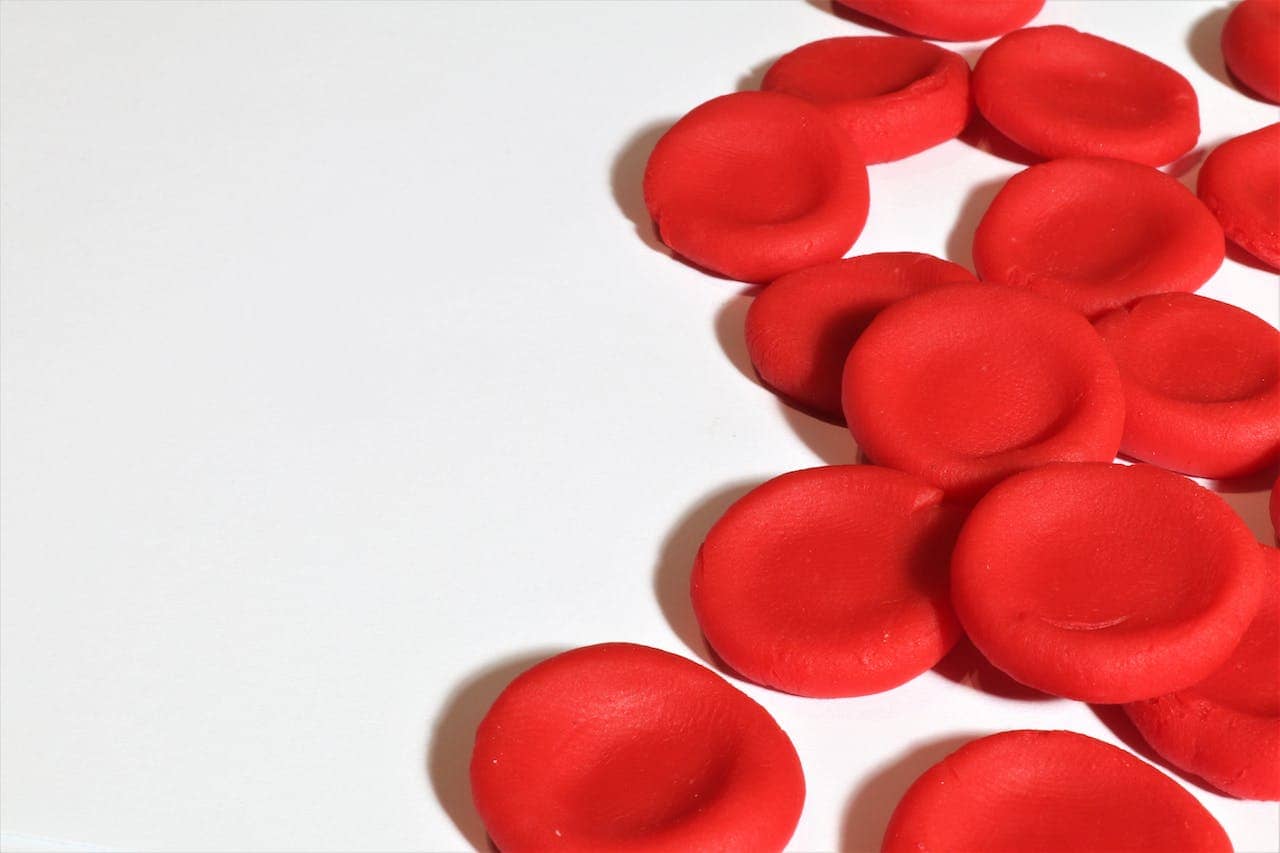
Iron deficiency anemia is a condition characterized by a lack of sufficient iron in the body to produce an adequate number of red blood cells. Iron is essential for the transportation of oxygen throughout the body, and when there’s not enough of it, the body’s various functions, including hair growth, can be affected.
Iron Deficiency and Hair Loss
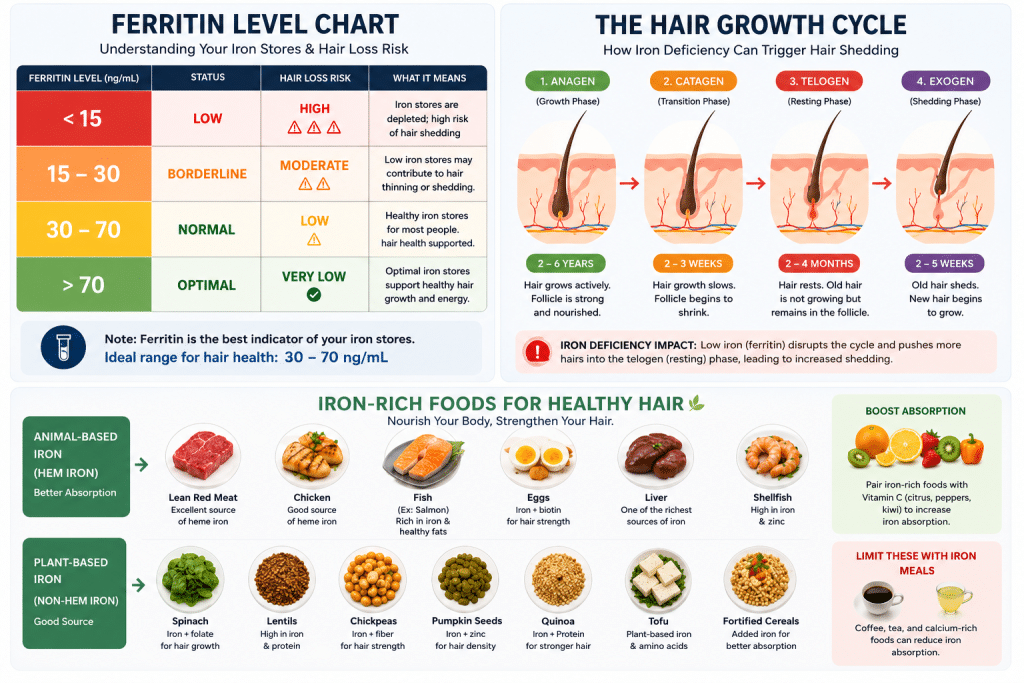
To understand the link between low iron and hair loss, it’s essential to be familiar with the hair growth cycle. Hair goes through several phases: anagen (growth phase), catagen (transitional phase), and telogen (resting phase). Iron plays a vital role in the anagen phase by ensuring the supply of oxygen and nutrients to the hair follicles.
When the body is low on iron, it redirects the available iron to more critical functions, such as supporting the brain and vital organs. Hair follicles, being non-essential structures, receive less oxygen and nutrients. As a result, the anagen phase is disrupted, and hair growth is stunted. In the telogen phase, affected hair strands are more likely to fall out prematurely.
Symptoms of Iron Deficiency Anemia
Recognizing the symptoms of iron deficiency anemia is crucial in understanding its link to hair loss. Common signs include:
- Fatigue and weakness
- Pale skin
- Dizziness
- Shortness of breath
- Cold hands and feet
- Brittle nails
- Headaches
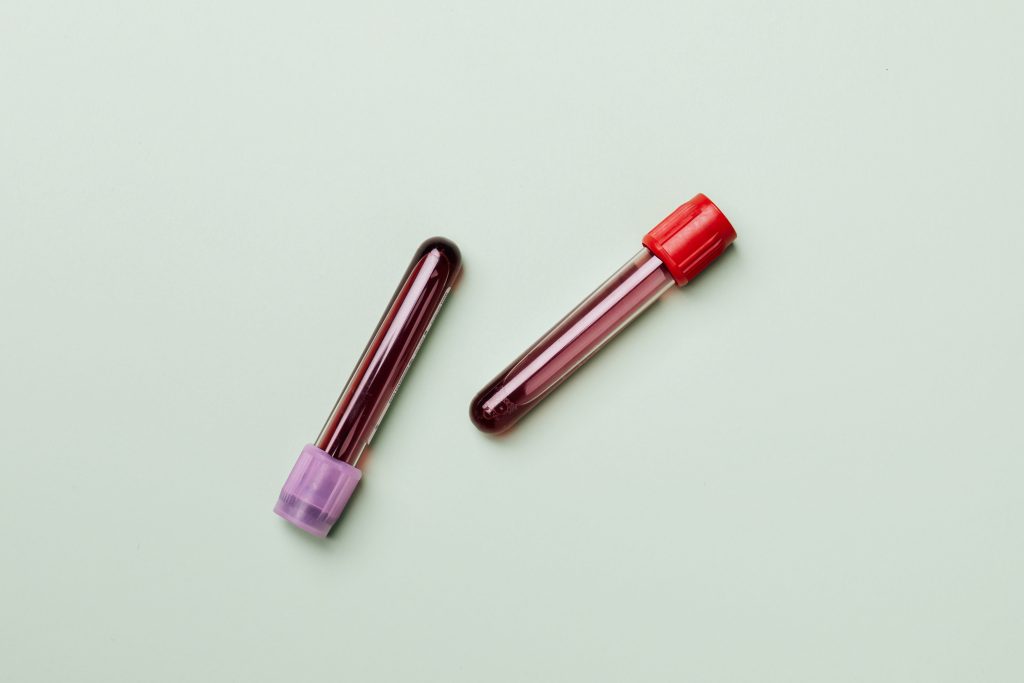
If you’re experiencing any of these symptoms along with hair loss, it’s essential to consult a healthcare professional. They can order blood tests to diagnose iron deficiency anemia accurately.
Treating Iron Deficiency-Induced Hair Loss
The good news is that iron deficiency anemia is treatable, and addressing the underlying iron deficiency can lead to hair regrowth. Treatment options may include:
- Iron supplements: A healthcare provider may recommend iron supplements to raise your iron levels.
- Dietary changes: Increasing your intake of iron-rich foods, such as lean red meat, poultry, fish, and fortified cereals, can help improve iron levels naturally.
- Vitamin C intake: Consuming vitamin C-rich foods or supplements can enhance iron absorption.
- Patience and persistence: It’s important to note that hair regrowth may not be immediate. It can take several months for your body to replenish its iron stores and for your hair growth cycle to return to normal. Being patient and consistent with treatment is key to seeing results.
Iron Deficiency and Hair Loss: Ferritin Levels, Hair Growth Cycle & Best Iron-Rich Foods
FAQs
Q1: Will hair loss from iron deficiency grow back?
Yes, hair loss caused by iron deficiency can often grow back once iron levels are restored. After treating the deficiency with dietary changes or iron supplements recommended by a healthcare provider, hair growth typically begins to improve within a few months. Because hair grows in cycles, it may take six to twelve months to see noticeable improvements in thickness and density.
Q2: What vitamin am I lacking if my hair is falling out?
Hair loss can be linked to deficiencies in several vitamins and minerals, including vitamin D, biotin (vitamin B7), vitamin B12, folate, and iron. Zinc deficiency may also contribute to excessive shedding. Since many conditions can cause hair loss, it’s important to consult a healthcare provider for testing before starting supplements, as taking unnecessary vitamins may not improve hair growth.
Q3: What does low ferritin hair loss look like?
Hair loss caused by low ferritin typically appears as diffuse thinning, meaning hair becomes thinner evenly across the scalp rather than forming distinct bald patches. Many people notice increased hair shedding when brushing, washing, or styling their hair, along with reduced hair volume and a wider part. Low ferritin hair loss often develops gradually and may occur alongside other symptoms of iron deficiency.
Q4: What are the worst symptoms of low iron?
Severe iron deficiency can cause extreme fatigue, weakness, shortness of breath, dizziness, headaches, pale skin, brittle nails, cold hands and feet, rapid heartbeat, and difficulty concentrating. Some people also experience restless legs syndrome and increased hair shedding. If you have symptoms of low iron, consult a healthcare provider for proper testing and treatment, as untreated iron deficiency can lead to iron-deficiency anemia and other health complications.
In Conclusion
Hair loss due to iron deficiency anemia is a common problem that often goes unnoticed. By understanding the link between low iron and hair loss, you can take proactive steps to address this issue.
If you suspect you may be experiencing hair loss related to iron deficiency, don’t hesitate to consult a healthcare professional who can provide proper diagnosis and guidance for effective treatment. With the right approach, you can rejuvenate your hair and regain your confidence.