How to Spot the Early Signs of Hair Loss
Key Takeaways
- Early signs of hair loss often appear gradually over several months.
- Hormonal changes and environmental factors can influence hair density.
- Scalp health plays a direct role in supporting consistent hair growth.
The age at which early signs of hair thinning begin can vary substantially. Some individuals, usually men, may see initial signs of hair loss in their 20s or 30s. For others, hair loss may not begin until middle age or their senior years.
Regardless of the age of onset, the early signs of hair loss can be very subtle and difficult to detect. This is especially true for hereditary pattern hair loss, a.k.a. androgenetic alopecia, which is the most common cause of hair loss in men and women. Recognizing the signs of hair loss is crucial because the sooner you begin treatment, the easier it will be to regrow your hair.
In this article, we will take a closer look at these signs so you can identify them and seek help if needed.
What is Normal Hair Loss?
Some amount of hair loss is normal. As part of the hair growth cycle, hair is shed periodically, and new hair will grow back in its place.
The amount of hair loss that occurs due to the normal hair cycle varies between individuals, but often ranges between 50 and 100 hairs per day. Therefore, as long as you are not seeing a dramatic increase in your usual level of shedding, you can be confident that a few strays are not signs of hair loss.
What Causes Hair Loss?
It is important not only to be able to recognize the signs of hair loss, but also to understand what condition may be causing it. The most common condition that causes hair thinning and balding is hereditary pattern hair loss, also known as androgenetic alopecia. This kind of hair loss is thought to primarily arise from a person’s genetic makeup, although environmental and lifestyle factors, as well as other medical conditions, may be related to its onset and progression.
Androgenetic alopecia typically starts with subtle thinning, making the early signs of hair loss caused by this condition difficult to notice. As it progresses, hair thinning and balding will occur in a predictable pattern affecting certain areas of the scalp (hence its name “pattern” hair loss). In men, this pattern includes hair loss primarily at the hairline and crown, eventually progressing to full baldness. For women, the typical pattern includes a widening of the hair part and more diffuse thinning over the entire scalp that does not progress to complete baldness.
Some signs of hair loss may indicate the cause is something other than androgenetic alopecia. These include hair loss that:
- Is sudden and rapid.
- Occurs on parts of your body other than your head.
- Started after a change in diet, medication, or medical treatment.
- Started after a significant trauma or other stressful event.
- Is accompanied by scalp pain, irritation, itchiness, rash/redness, or dry, flaky skin.
- Is accompanied by other symptoms of illness or feeling unwell.
If you notice any of these signs of hair loss, it may not be a result of androgenetic alopecia, and you should consult a doctor for diagnosis and treatment advice.
Signs of Hair Loss Due to Androgenetic Alopecia
As we discussed earlier, androgenetic alopecia usually starts with subtle thinning and progresses gradually, making the early signs of hair loss due to this condition difficult to spot. However, there are a few telltale signs that you may have thinning hair due to androgenetic alopecia.
Increased Hair Shedding
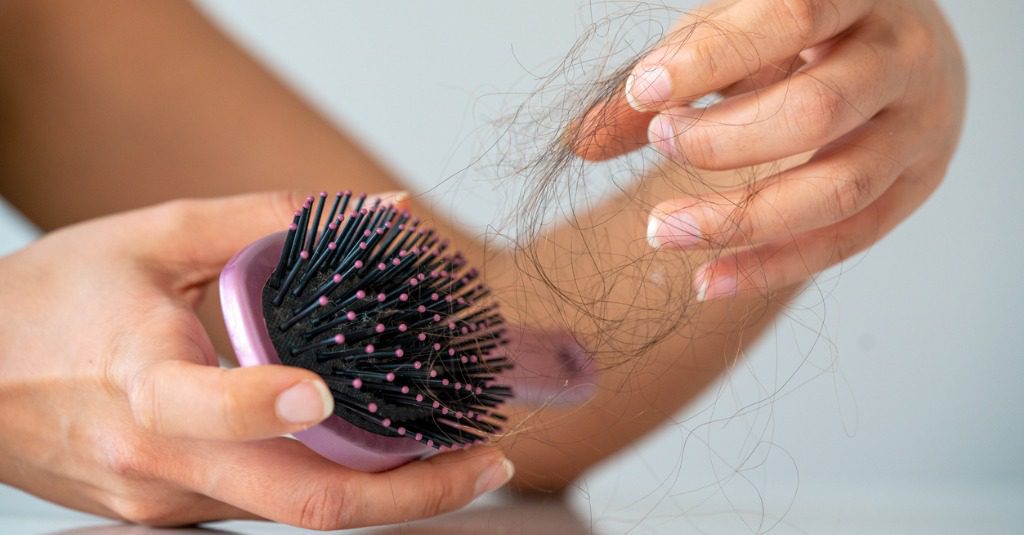
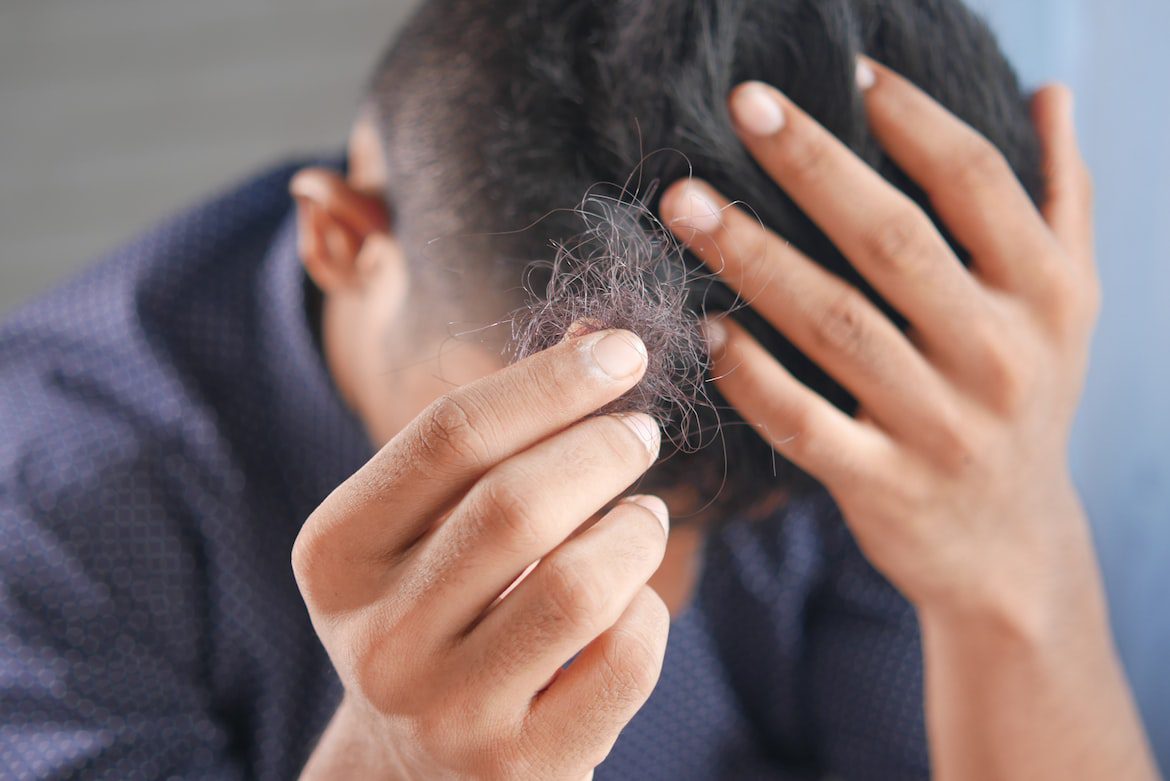
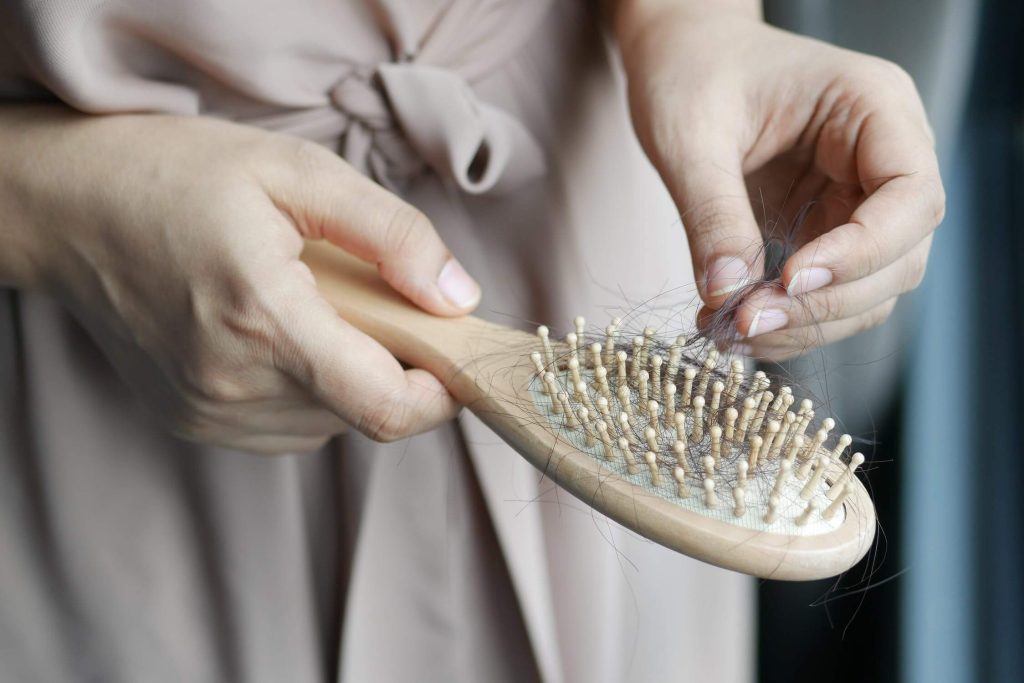
It may seem obvious, but the most telltale sign of hair loss is an increase in your normal level of hair shedding. This is often easy to notice while washing your hair in the shower, putting in hair product, or combing/brushing your hair. Also, look out for increased amounts of shed hair in hats, on your clothes, and on your pillow after a night’s sleep.
Receding Hairline
A receding hairline is often one of the first signs of hair loss due to androgenetic alopecia. This is more often the case for men. However, women with pattern hair loss may also experience a receding hairline.
To recognize a receding hairline, look for greater space at your temples and an increase in the size of your forehead. One useful way to spot early signs of hair thinning is to check older photos and compare them to how you look currently.
Thinning Hair on Top of the Head
Thinning hair on the top of your head is another sign of hair loss caused by androgenetic alopecia. For men, this thinning will usually start at the crown, whereas women may see an increase in the size of their hair part combined with more diffuse thinning across the top of the scalp.
Early signs of hair thinning on the top of your head can be difficult to notice because you can’t see your scalp from that angle. However, you may notice your hair feeling thinner when washing or styling it. Another early sign of hair loss on the top of your head is sunburn on your scalp after a long day in the sun.
If you suspect your hair is thinning on the top of your head, you can ask a friend to take some photos, or even get the opinion of your barber or stylist.
Hair Loss in Women Over 40 Often Reflects Hormonal Changes
Women over 40 experience shifts in hair density linked to hormonal changes during perimenopause and menopause. Declining estrogen levels can shorten the growth phase of the hair cycle, leading to increased shedding and slower regrowth.
These early signs of hair thinning can appear as reduced fullness, especially when tying hair back or parting it. Clinical observations show that these changes often develop over a period of 6 to 12 months, making these signs of hair loss easy to miss without consistent tracking.
Nutritional status also becomes increasingly important during this stage. Iron levels, protein intake, and vitamin D all play a role in supporting the hair growth cycle. A doctor or hair loss specialist can help evaluate these factors through routine testing.
Hard Water Can Affect Hair Texture and Breakage
Water quality is an overlooked factor in hair condition. Hard water contains minerals such as calcium and magnesium that can accumulate on the scalp and hair over time. This buildup can make hair feel coarse and more difficult to manage. It can also increase friction during brushing, leading to breakage that may be mistaken for shedding.
Using a shower filter and incorporating a clarifying shampoo once every 1 to 2 weeks can help reduce buildup. Following with a hydrating conditioner helps maintain balance and supports hair flexibility.
Ingredient Awareness Supports Scalp Health
Hair care products play a direct role in scalp condition. Some cleansing agents, including sodium lauryl sulfate, are highly effective at removing oil but may be too strong for frequent use in certain individuals.
As discussed in this article, repeated exposure to harsh surfactants can contribute to dryness, irritation, or early signs of hair loss in sensitive scalps. Over time, this may impact the environment needed for consistent hair growth. Choosing gentler formulations or rotating products can help maintain a stable scalp environment, especially for those noticing early signs of hair thinning.
Do You See Any of These Signs? Time to Take Action

The ability to recognize the signs of hair loss is important because the earlier you begin treatment, the easier it will be to regrow and maintain the thickness of your hair.
Fortunately, if you are experiencing hereditary pattern hair loss, there are a number of treatment options, some of which are available without a doctor’s prescription, including medications like minoxidil as well as low-level laser therapy (LLLT).
LLLT in particular is a great treatment for hair loss, because it is all-natural, free from drugs, chemicals, surgery, and many of the adverse side effects that can be associated with these treatments. Numerous clinical trials have also shown that LLLT is consistently able to increase the density of hair in both men and women suffering from hereditary pattern hair loss.
Are you interested in trying LLLT for your hair loss? The Original LaserCap provides prescription-strength LLLT to maximize your hair regrowth. LaserCap is also FDA-cleared to treat hereditary pattern hair loss in both men and women. Compare our LaserCap models to get started on your journey toward happier, healthier hair!