
What Is Diffuse Hair Loss? Causes, Signs, and What to Do Next
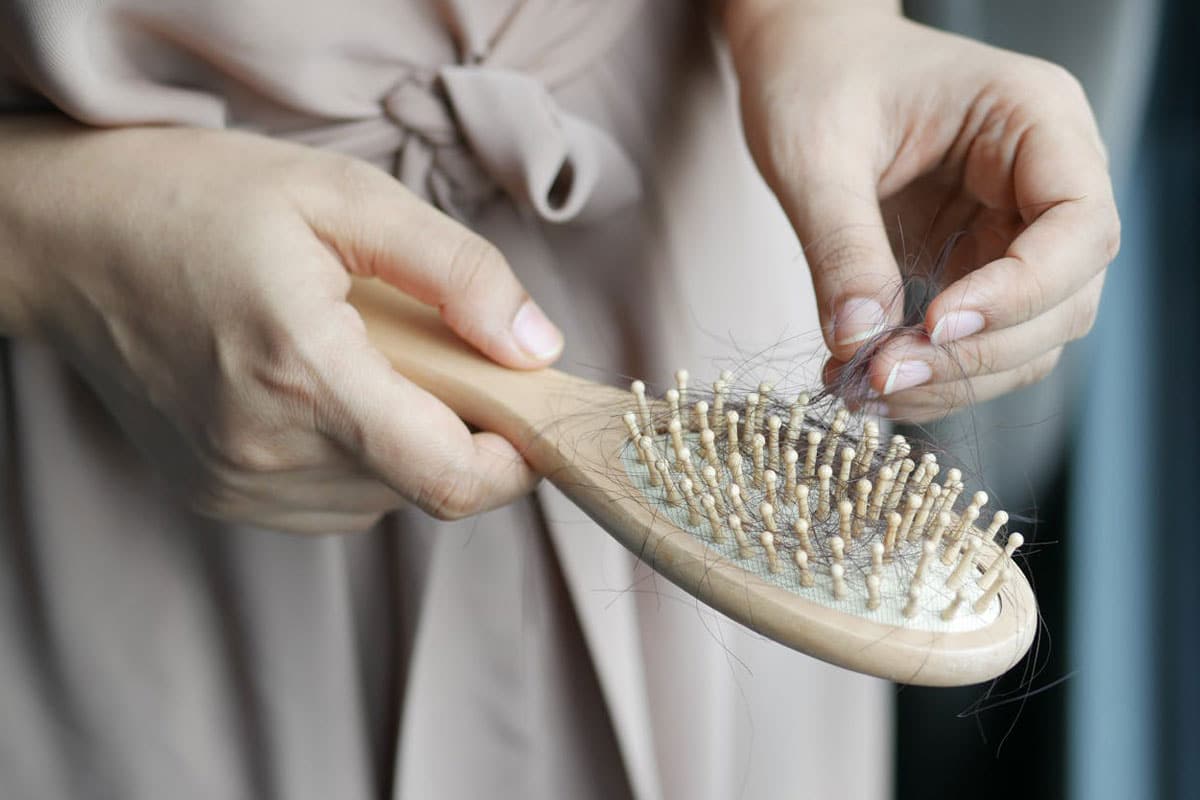
Seeing more hair in the shower, on your brush, or across your pillow can feel unsettling, especially when the thinning seems to happen all over the scalp instead of in one defined area. Diffuse hair loss is a pattern of shedding or reduced density that affects the scalp more broadly, and the next step is usually identifying the trigger rather than guessing.
What Causes All-Over Thinning
One of the most common causes is telogen effluvium, a condition where more hairs than usual shift into the resting phase and shed about two to three months after a trigger. Common triggers include illness, surgery, rapid weight loss, childbirth, iron deficiency, thyroid changes, nutritional gaps, and significant emotional or physical stress. A 2021 review in the Journal of Dermatological Science describes telogen effluvium as a common form of diffuse hair loss that often follows physiologic or emotional stress.
Diffuse thinning can also be tied to pattern hair loss, medication effects, or, less commonly, diffuse alopecia areata. A 2024 clinical review from American Family Physician notes that diffuse alopecias include telogen and anagen effluvium and that diagnosis depends on history, examination, and targeted lab testing when needed.
Signs That Help Narrow It Down
The pattern often gives useful clues. With telogen effluvium, people usually notice increased shedding first, then a lower ponytail volume or more visible scalp. With pattern hair loss, the change may feel slower, with widening through the part or reduced density at the crown. If you also have itching, scaling, broken hairs, or sharply defined bald spots, that points to a different workup.
A careful exam matters because the right diffuse hair loss treatment depends on the cause. Doctors or hair loss specialists may review your timeline, recent stressors, medications, iron status, thyroid function, protein intake, and scalp findings before recommending a plan. That step can save time and prevent trial-and-error.
What To Do Next For Recovery
The first goal is to correct the diffuse hair loss trigger when possible. That may mean improving iron intake, addressing thyroid imbalance, adjusting a medication under medical guidance, or allowing time for recovery after illness or stress. In many cases of telogen effluvium, regrowth begins once the underlying trigger settles, though visible improvement can take several months because hair cycles move slowly.
A structured diffuse hair loss treatment plan may also include topical minoxidil when appropriate, especially if pattern hair loss is part of the picture. Gentle scalp care also helps: mild shampoo, less heat styling, and avoiding tight hairstyles reduce added stress on fragile strands.
Where LLLT Fits In
LLLT may be a helpful option to discuss with a doctor or hair loss specialist during recovery. Low-Level Laser Therapy, also called photobiomodulation, delivers gentle, low-intensity laser light to the scalp. In a 24-week randomized, double-blind trial, investigators reported improved hair density with home-use LLLT in androgenetic alopecia, supporting its role as a noninvasive therapy for appropriate patients.
For readers ready to explore next steps, the LaserCap offers a great place to begin. When diffuse hair loss is caught early and evaluated carefully, recovery usually becomes much easier to map out.